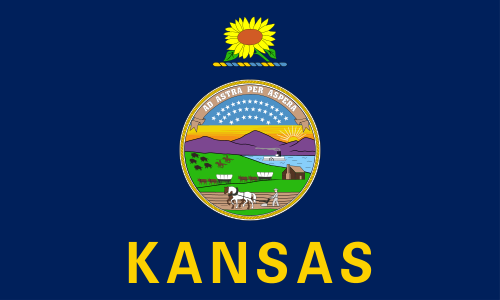
 Editorial category: Standard
Kansas HR compliance guide
Kansas wage rules split between the state law's 46-hour threshold and the federal 40-hour rule for FLSA-covered employees.
Employeez Team · Updated
Overview
Kansas is often described as a federal-baseline state, but its own Minimum Wage and Maximum Hours Law matters for workers who are not covered by the FLSA. That state-only law sets a 46-hour workweek overtime threshold, while covered nonexempt federal employees generally qualify after 40 hours. The state also has a Wage Payment Act, a Kansas Act Against Discrimination, and workers' compensation rules with separate coverage definitions. Kansas does not impose a general statewide private-sector paid-sick or family-leave program. This overview is informational, not legal advice.
What the category means. Kansas has a $7.25 state minimum and a state overtime threshold that differs from federal law, but the Kansas minimum-wage and maximum-hours statute excludes employment covered by the FLSA. The correct analysis is coverage-first. State final wages are due by the next regular payday, and workers' compensation coverage has its own payroll and industry tests. This label is Employeez’s editorial reading, not an official risk rating.
Key Kansas laws
Kansas Minimum Wage and Maximum Hours Law
OngoingSets a $7.25 minimum and a 46-hour overtime threshold for employees within the state law. Employees and employers covered by the FLSA are outside this Kansas statute, so coverage must be decided before applying the state threshold.
Applies to: Employees not covered by the federal FLSA, subject to state-law exceptions
Kansas Wage Payment Act
OngoingRequires regular paydays designated in advance, at least monthly, and payment of earned wages after resignation or discharge by the next regular payday. Willful nonpayment can create damages liability.
Applies to: Kansas employers and employees covered by the Act
Kansas Act Against Discrimination (KAAD)
OngoingProhibits discrimination in employment on enumerated grounds, including race, religion, color, sex, disability, national origin, and ancestry. Kansas agency materials identify a four-person employer threshold; federal statutes may protect additional workers or categories independently.
Applies to: Generally employers with 4+ persons under Kansas Human Rights Commission guidance
Kansas Workers' Compensation Act
OngoingKansas requires workers' compensation for many employers, with state-described payroll, agricultural, and other exceptions. The Workers Compensation Division supplies current coverage and claims information; do not rely on an unverified small-employer assumption.
Applies to: Generally non-agricultural employers above the statutory gross-payroll threshold, subject to exceptions
Pay rules
- Minimum wage
- $7.25/hour under Kansas law for covered employment not governed by the FLSA; covered federal workers also have the $7.25 federal floor, with exemptions and coverage rules.
- Overtime
- Covered, nonexempt FLSA employees generally receive 1.5 times the regular rate after 40 hours. Kansas's state-only Minimum Wage and Maximum Hours Law uses 46 hours and excludes FLSA-covered employment; federal and state exemption tests must be checked.
- Final pay timing
- After resignation, quitting, or discharge, pay earned wages by the next regular payday on which the employee would have been paid. Employers must designate regular paydays in advance and pay at least monthly.
- Pay transparency
- No state-level requirement noted. The Kansas employment statutes and agency materials reviewed do not establish a general private-sector salary-range-in-job-ad mandate. KAAD separately bars discrimination in compensation, and federal equal-pay requirements still apply. Voluntary ranges should have a documented good-faith basis; posting is not a substitute for checking actual pay decisions.
Rates and thresholds change, and some cities and counties set their own. Confirm current figures with the sources below.
- ks-workplace Kansas Department of Labor — Workplace Laws and Requirements (opens in a new tab)
- ks-hours Kansas Legislature — K.S.A. 44-1204, Overtime Compensation (opens in a new tab)
- ks-final Kansas Legislature — K.S.A. 44-315, Separation Prior to Payday (opens in a new tab)
- ks-flsa-overtime U.S. Department of Labor — FLSA Overtime Fact Sheet (opens in a new tab)
Leave rules
Federal FMLA
Unpaid
- Duration
- Up to 12 workweeks in a 12-month period for most qualifying reasons
- Applies to
- Private employer generally 50+ employees in 20 workweeks; employee needs 12 months, 1,250 hours, and 50 employees within 75 miles; public agencies and schools have separate rules
FMLA is job-protected and requires continued group health coverage for eligible employees. It is unpaid unless employer-provided paid leave runs concurrently; Kansas has no general state paid-family-leave program.
Kansas general private-sector paid sick or family leave
Unpaid
- Duration
- No general statewide mandate identified
- Applies to
- No general state leave program; contracts, employer policies, and federal law remain applicable
Kansas DOL states that employers are not generally required to provide vacation or sick leave. Keep any voluntarily promised accrual and payout terms clear and consistently administered.
Determine which wage statute governs before choosing the overtime threshold
Kansas Department of Labor explains that employees and employers covered by the FLSA are not covered by the Kansas Minimum Wage and Maximum Hours Law. The Kansas statute's rate is $7.25 and its overtime threshold is more than 46 hours in a workweek for employment to which that state act applies. By contrast, covered, nonexempt FLSA workers generally receive overtime after 40 hours. Do not choose the more convenient threshold without documenting coverage.
FLSA coverage can be enterprise-wide—often for businesses with at least $500,000 in annual sales or certain hospitals, schools, care institutions, and public agencies—or individual through interstate commerce. Statutory overtime exemptions also matter. A job title, commission plan, or salary does not independently establish exemption; evaluate the applicable duties and compensation tests.
- ks-workplace Kansas Department of Labor — Workplace Laws and Requirements (opens in a new tab)
- ks-hours Kansas Legislature — K.S.A. 44-1204, Overtime Compensation (opens in a new tab)
- ks-flsa-coverage U.S. Department of Labor — FLSA Coverage Fact Sheet (opens in a new tab)
- ks-flsa-overtime U.S. Department of Labor — FLSA Overtime Fact Sheet (opens in a new tab)
Run a regular-payday system and use the same next-payday rule at separation
Kansas law requires employers to designate regular paydays in advance and pay at least monthly. When an employee quits, resigns, or is discharged, earned wages are due no later than the next regular payday on which the person would have been paid. The state statute provides a damages remedy for willful nonpayment, so preserve the payroll record and the stated payday calendar.
Kansas Department of Labor guidance also distinguishes wages from optional benefits: state law does not generally require vacation or sick leave. If the employer's own policy grants vacation, define when it accrues, whether carryover is allowed, and what happens at separation. Do not silently change a written promise after employees have earned the benefit.
Apply Kansas and federal discrimination coverage on their own terms
The Kansas Act Against Discrimination prohibits employment discrimination on grounds including race, religion, color, sex, disability, national origin, and ancestry. The Kansas Human Rights Commission describes the state employer threshold as four or more persons. Kansas law does not list every category found in federal law; federal Title VII, ADA, ADEA, and their coverage tests must be evaluated independently.
The state statute addresses discrimination in compensation and employment terms as well as hiring and discharge. Use consistent job-related selection and pay criteria, document the reason for decisions, and investigate complaints promptly. Kansas statutes and agency guidance can change; check current state code before making a decision based on a protected class or a small-employer exception.
Separate workers' compensation, FMLA, and voluntary leave
Kansas workers' compensation generally reaches non-agricultural employers with more than $20,000 in gross annual payroll, with separate exceptions and coverage rules; the state describes agricultural and small-payroll exceptions. Confirm coverage before an injury occurs and use the Kansas Department of Labor Workers Compensation Division for claims and compliance information. Workers' compensation benefits concern qualifying job injuries, not ordinary sick time.
Kansas has no general state paid-family-leave program. FMLA is unpaid and job-protected only when a covered employer and individually eligible employee satisfy the federal tests: generally 50 employees in 20 workweeks for a private employer, plus 12 months' service, 1,250 hours, and 50 employees within 75 miles for the employee. Government agencies and schools have separate employer coverage. Do not confuse a sick-leave policy with FMLA eligibility.
Facts and pitfalls
Worth knowing
- Kansas state overtime after 46 hours applies only where Kansas's state hours law governs; FLSA-covered nonexempt workers generally use 40 hours.
- FLSA coverage has both enterprise and individual-commerce routes, so small company size alone is not a conclusive exemption.
- Kansas pay frequency is at least monthly on regular paydays set in advance.
- Workers' compensation coverage generally uses a $20,000 gross annual payroll rule for non-agricultural businesses, with exceptions to verify.
- KAAD has a lower employer threshold than Title VII under Kansas Human Rights Commission materials.
Easy to miss
- Do not apply a 46-hour overtime threshold to workers covered by the federal FLSA.
- A salaried title or contractor label does not resolve FLSA status or employee classification.
- Final pay is due at the next regular payday, not at a termination-specific arbitrary number of days.
- Check agriculture and payroll exceptions before deciding workers' compensation coverage is optional.
Employer checklist
A starting point for review, not a complete list of obligations.
- Record the basis for FLSA enterprise or individual coverage and decide whether the Kansas-only wage law governs.
- For covered nonexempt employees, calculate overtime after 40 federal hours; reserve the 46-hour threshold for state-law-only coverage.
- Schedule regular paydays in advance, at least monthly, and pay every separating employee by the next regular payday.
- Check KAAD's four-person threshold and separately review Title VII, ADA, ADEA, and accommodation obligations.
- Verify workers' compensation coverage using gross payroll, business type, and statutory exceptions before relying on a small-business exception.
- Publish a written vacation/sick-leave policy that explains accrual, use, carryover, and payout without representing optional leave as a legal mandate.
Hypothetical example
Hypothetical: a Kansas repair shop has three workers who serve only local customers, but one employee regularly handles interstate shipments. The employer should test FLSA individual coverage for that employee instead of applying the state 46-hour threshold to everyone. A second employee is discharged after a payday; the employer should pay that worker's earned wages by the next scheduled regular payday and retain the time and payroll records.
An invented scenario for illustration. It is not a real company or a ruling.
Common questions about Kansas
Does Kansas require overtime only after 46 hours?
Only employees governed by Kansas's Minimum Wage and Maximum Hours Law use that state threshold. Kansas DOL says FLSA-covered employers and employees are not covered by that state law; covered, nonexempt federal workers generally qualify for overtime after 40 hours.
When must Kansas final wages be paid?
Whether the employee quits or is discharged, earned wages are due no later than the next regular payday on which the employee would have been paid. Regular paydays must be designated in advance, and payment must occur at least monthly.
Does Kansas require sick leave or vacation?
Kansas DOL guidance says employers generally are not required to provide vacation or sick leave. If an employer promises leave through a policy or contract, administer the promise consistently and determine what accrued amounts are payable at separation.
Sources and scope
Scope. Written by the Employeez editorial team from the public sources below. It highlights common rules for small employers and does not cover every statute, exception, local ordinance or recent change. It is general information, not legal advice. Consider confirming specifics with the agency or an employment attorney. Last editorial update: October 1, 2026.
- ks-workplace Kansas Department of Labor — Workplace Laws and Requirements (opens in a new tab)
- ks-workers Kansas Department of Labor — Workers Compensation Division (opens in a new tab)
- ks-final Kansas Legislature — K.S.A. 44-315, Separation Prior to Payday (opens in a new tab)
- ks-discrimination Kansas Legislature — K.S.A. 44-1009, Unlawful Employment Practices (opens in a new tab)
- ks-hours Kansas Legislature — K.S.A. 44-1204, Overtime Compensation (opens in a new tab)
- ks-flsa-coverage U.S. Department of Labor — FLSA Coverage Fact Sheet (opens in a new tab)
- ks-flsa-overtime U.S. Department of Labor — FLSA Overtime Fact Sheet (opens in a new tab)
- ks-fmla U.S. Department of Labor — FMLA Fact Sheet (opens in a new tab)
Keep exploring
Related glossary terms
- FLSA
The Fair Labor Standards Act (FLSA) is a U.S. federal law governing minimum wage, overtime, wage records, and child labor. Coverage and exemptions depend on the job and current law; state or local rules may provide stronger protections.
- FMLA
The Family and Medical Leave Act (FMLA) provides eligible employees of covered U.S. employers unpaid, job-protected leave for specified family and medical reasons. Employer coverage, individual eligibility, notice, and overlapping state benefits must be assessed separately.
- Workers' Compensation
Workers’ compensation is a state-based system that provides specified benefits for covered work-related injuries and illnesses. Eligibility, benefits, insurance, reporting, and return-to-work rules vary by jurisdiction and worker category.
- Pay Transparency
Pay transparency is sharing compensation information with applicants or employees, including pay ranges where required. U.S. disclosure laws vary by location, employer, and role; a posted range does not by itself establish pay equity.
 Texas
 Florida
 Georgia
 North Carolina