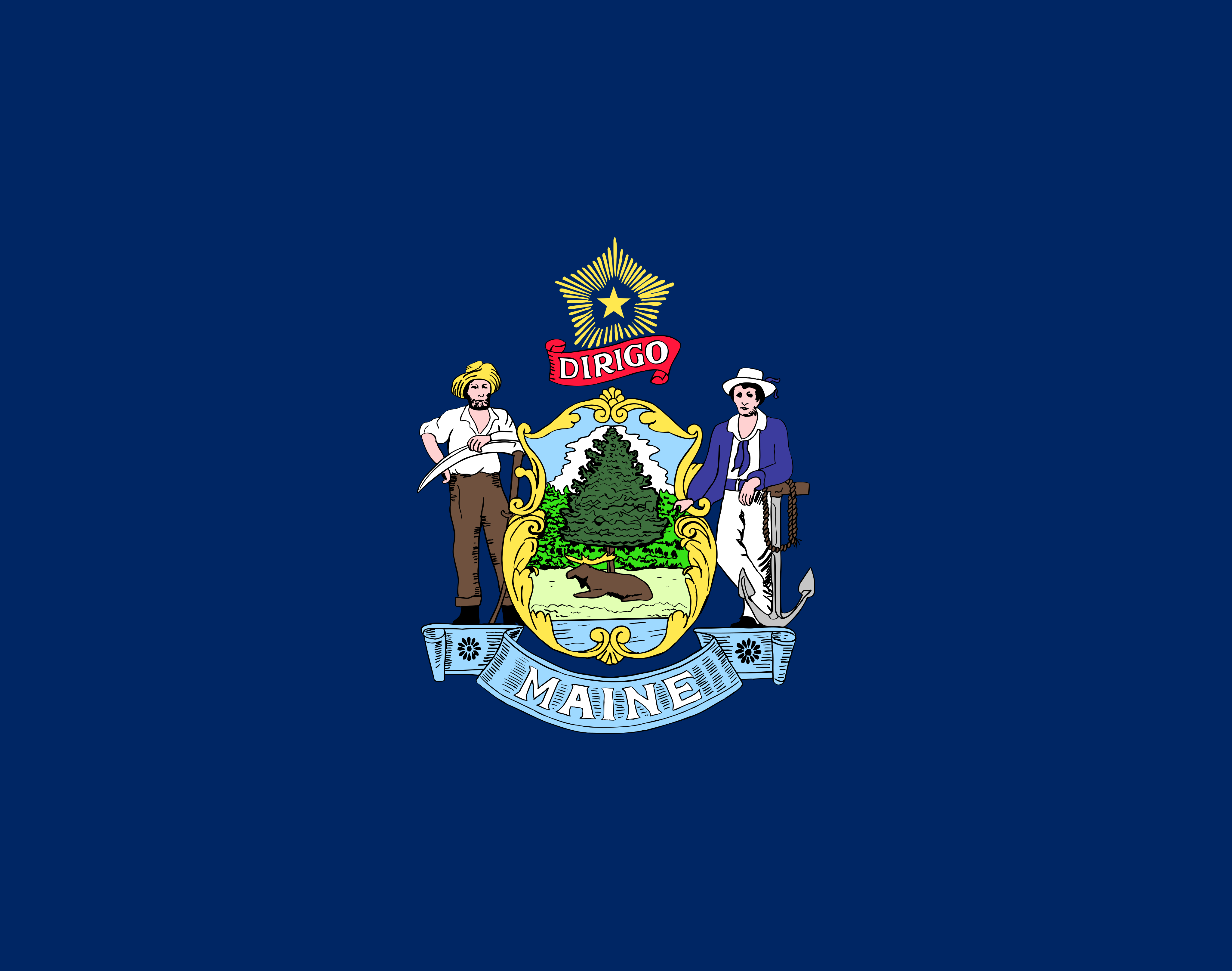
 Editorial category: Medium
Maine HR compliance guide
Maine now combines any-reason earned leave, a paid family-leave program, and a new pay-range posting law for employers with 10 or more employees.
Employeez Team · Updated
Overview
Maine employers should maintain separate ledgers for Earned Paid Leave, Maine Paid Family and Medical Leave, employer vacation, and federal FMLA. The state minimum wage is $15.10 per hour for 2026. From July 29, 2026, an employer with 10 or more employees must include prospective pay range information in job postings, subject to the law's commission-only treatment, and must retain employee position/pay-history records. Maine also requires final wages by the next established payday, with a significant statutory vacation-payout rule for many employers. The official materials cited here are informational; confirm current agency forms and eligibility before administration.
What the category means. Maine's rules are layered and have materially changed in 2026. Earned Paid Leave is an any-reason benefit for covered employers with more than 10 employees for more than 120 days; the PFML benefit phase began in May 2026 after contributions began in 2025. A separate pay-transparency law took effect July 29, 2026 for employers with 10 or more employees. Do not conflate statutory earned leave, PFML wage replacement, job-protection rules, and employer vacation payout. This label is Employeez’s editorial reading, not an official risk rating.
Key Maine laws
Maine Pay Transparency — 26 M.R.S. § 622-A
July 29, 2026Effective July 29, 2026, employers with 10 or more employees must list a prospective pay range in job postings for available positions. A commission-only job must disclose that fact. Employers must disclose the range for an employee's current position on request and retain position and pay-history records during employment plus three years.
Applies to: Employers with 10 or more employees
Maine Earned Paid Leave — 26 M.R.S. § 637
January 1, 2021Covered employers with more than 10 employees for more than 120 days allow one hour of paid leave per 40 hours worked, up to 40 hours in a year. Leave can be used for any reason; seasonal industries and specified exceptions require review.
Applies to: More than 10 employees for more than 120 days in a calendar year, subject to exclusions
Maine Paid Family and Medical Leave
Contributions January 2025; benefits May 2026Contributions began in 2025 and benefits began in May 2026. Eligible workers can apply for up to 12 weeks of partial wage-replacement benefits for qualifying family, medical, military-family, or safety reasons; contribution responsibilities vary by employer size.
Applies to: Eligible Maine workers and employers under program coverage and contribution rules
Maine minimum wage and cessation-of-employment rules
$15.10 minimum effective January 1, 2026; wage-payment law ongoingMaine's 2026 minimum wage is $15.10 per hour. Final wages are due by the next established payday, and accrued unused vacation must generally be paid at separation for covered employers, with statutory exclusions for public employers and employers with 10 or fewer employees.
Applies to: Covered Maine employees; vacation payout varies by employer and policy status
Pay rules
- Minimum wage
- $15.10/hour statewide for 2026; review the annual Maine Department of Labor notice and any applicable local requirement.
- Overtime
- Covered nonexempt employees generally receive 1.5 times the regular rate after 40 hours in a workweek; FLSA exemptions and Maine-specific rules must be reviewed.
- Final pay timing
- Pay all wages by the next established payday. For many employers, unused accrued vacation must also be paid at separation; public employers and employers with 10 or fewer employees are excluded from that payout mandate.
- Pay transparency
- State requirement noted. Maine's job-posting disclosure law is new and has a clear size threshold: employers with 10 or more employees, effective July 29, 2026. Covered postings for available positions must state the prospective range; solely commission-based positions instead state that compensation is commission-only. Current employees can request the range for their position, and employers have a three-year post-termination retention duty for position/pay-history records. This is not a universal disclosure rule for employers below 10 employees.
Rates and thresholds change, and some cities and counties set their own. Confirm current figures with the sources below.
Leave rules
Maine Earned Paid Leave
Paid
- Duration
- Up to 40 hours earned in a year; 1 hour per 40 hours worked
- Applies to
- Employer with more than 10 employees for more than 120 days; statutory exclusions apply
Can be used for any reason. Accrual begins at employment; use generally may be delayed until 120 days. Unused time carries forward. This is an employer-funded paid-leave entitlement, not PFML insurance or an FMLA eligibility shortcut.
Maine Paid Family and Medical Leave
Paid
- Duration
- Up to 12 weeks of benefit leave
- Applies to
- Eligible workers under program earnings and coverage rules; contribution split depends on employer size
Benefits began May 2026 and provide partial wage replacement for statutory qualifying reasons. Use the program's current claim and employer guidance. Separately test whether federal FMLA or another law gives the employee job-protected reinstatement rights.
Federal FMLA
Unpaid
- Duration
- Up to 12 workweeks for most qualifying reasons
- Applies to
- Covered employer and eligible employee; private worksite generally 50 within 75 miles, plus 12 months and 1,250 hours
Unpaid, job-protected leave with group health continuation. PFML benefit eligibility and FMLA job protection are different tests and may run concurrently where both laws apply.
Operationalize the 2026 pay-transparency and recordkeeping law
Public Law 2025, chapter 771 added 26 M.R.S. § 622-A, effective July 29, 2026. Employers with 10 or more employees must include in a posting for a specific available position a statement listing the prospective pay range they will offer a successful applicant. A position compensated solely by commission is handled differently: the posting must state that compensation is commission-only. The law reaches electronic and printed postings and recruiting done indirectly through a third party.
The same section gives an employee the right to request the pay range offered for the employee's own position and requires the employer to retain each employee's positions and pay history throughout employment and for three years after termination. Set a range using a genuine budget or scale, route agency postings through the same approval process, and assign retention ownership. This law is not a general requirement to disclose every incumbent's individual pay to coworkers.
Keep Earned Paid Leave and PFML in separate programs
Earned Paid Leave applies when an employer has more than 10 employees in its usual and regular business for more than 120 days in a calendar year, with seasonal-industry and other statutory exclusions. Covered employees accrue one hour per 40 hours worked, up to 40 hours in a year; use generally cannot begin until 120 days of employment, and unused accrued leave carries over. The leave can be used for any reason, not only illness. Statutory notice and reasonable-scheduling rules still apply.
Maine PFML contributions began January 2025 and eligible workers may apply for up to 12 weeks of paid leave beginning May 2026. This state-administered program provides partial wage replacement and has its own contribution, claim, earnings, and qualifying-reason rules. Do not treat approval of a benefit claim as automatically resolving every employer-side reinstatement or federal/state job-protection question; analyze FMLA and other applicable protections separately. An employee's earned-leave bank is not the same as a PFML benefit claim.
- me-earned Maine DOL: Earned Paid Leave guidance (opens in a new tab)
- me-earned-statute Maine Revised Statutes, Title 26 § 637: Earned Paid Leave (opens in a new tab)
- me-pfml Maine Paid Leave: employer requirements and benefit start (opens in a new tab)
- fmla U.S. Department of Labor: FMLA coverage and employee eligibility (opens in a new tab)
Pay final wages and accrued vacation according to Maine's separate rules
Maine requires an employee leaving employment to be paid in full no later than the next established payday. Maine's statute also gives accrued vacation a wage character when the employer's terms or established practice provide vacation. For unused paid vacation accrued on or after January 1, 2023, payment at separation is generally required, but the statute exempts public employers and employers with 10 or fewer employees; a collective bargaining agreement can also affect the result.
Do not confuse vacation with Earned Paid Leave or PFML. The leave statute and vacation statute have different coverage, use, and separation rules. Put the employee-count test, public-employer status, CBA, and actual policy into the final-pay checklist. Maine's 2026 statewide minimum wage is $15.10, adjusted by the state each year; use the current notice and check any locally applicable requirement rather than recycling old payroll tables.
Facts and pitfalls
Worth knowing
- Maine job-posting pay ranges became a statewide requirement for employers with 10+ employees on July 29, 2026.
- Maine PFML benefit payments started in May 2026; contributions began earlier, in January 2025.
- Earned Paid Leave applies at more than 10 employees for more than 120 days and can be used for any reason.
- Maine's next-payday rule and vacation-payout rule are separate; vacation payout has statutory employer-size and public-employer exclusions.
Easy to miss
- Do not omit ranges from postings outsourced to a recruiter; the law reaches indirect recruiting.
- Do not treat Maine Earned Paid Leave as PFML insurance or as a general substitute for FMLA.
- Do not assume every PFML benefit recipient meets a separate job-protection test.
- Do not reuse old minimum wage tables; Maine's $15.10 rate is specific to 2026.
Employer checklist
A starting point for review, not a complete list of obligations.
- Count Maine employees and identify whether the 10-employee pay-posting threshold applies.
- Put a prospective range in each covered electronic, print, internal, and recruiter-created job posting; state commission-only compensation where applicable.
- Create a process for current employees to request their role's pay range and retain position/pay history for employment plus three years.
- Check Earned Paid Leave employer size, 120-day duration, seasonal exception, accrual, 120-day use wait, and carryover.
- Register, report wages, remit required PFML contributions, and use current program guidance for claims beginning May 2026.
- Pay final wages by the next established payday and separately test accrued vacation payout against the policy, size, public-employer, and CBA rules.
- Use the 2026 $15.10 wage floor and calendar the next annual adjustment.
Hypothetical example
Hypothetical: a Maine retailer with 12 employees posts an hourly job in August 2026 and uses an outside recruiter. The retailer is above the 10-employee threshold, so the posting must include the prospective pay range even though a third party distributes it. An incumbent in the role may request that position's range. If an employee later leaves, HR must separately determine next-payday wages, Earned Paid Leave balance, PFML claims, and whether accrued vacation is payable under the employer's policy and statutory coverage.
An invented scenario for illustration. It is not a real company or a ruling.
Common questions about Maine
Does Maine's new pay-range law cover a 9-employee employer?
The enacted statute applies to an employer with 10 or more employees, so a 9-employee employer is below that specific posting threshold. Other pay and nondiscrimination obligations still apply.
Is Maine Earned Paid Leave only for illness?
No. Covered employees can use it for any reason, subject to statutory notice and scheduling rules. It is distinct from Maine PFML, which pays benefits for qualifying program reasons.
Must Maine employers pay unused vacation at termination?
Generally, accrued vacation provided by the employer's terms or established practice must be paid at separation under the current statute, but public employers and employers with 10 or fewer employees are excluded from the mandate. Check policy and any collective bargaining agreement.
Sources and scope
Scope. Written by the Employeez editorial team from the public sources below. It highlights common rules for small employers and does not cover every statute, exception, local ordinance or recent change. It is general information, not legal advice. Consider confirming specifics with the agency or an employment attorney. Last editorial update: October 1, 2026.
- me-transparency Maine Public Law: pay-range disclosure and pay-history records (opens in a new tab)
- me-newlaw Maine DOL: 2026 labor-law updates (opens in a new tab)
- me-earned Maine DOL: Earned Paid Leave guidance (opens in a new tab)
- me-earned-statute Maine Revised Statutes, Title 26 § 637: Earned Paid Leave (opens in a new tab)
- me-pfml Maine Paid Leave: employer requirements and benefit start (opens in a new tab)
- me-final Maine Revised Statutes, Title 26 § 626: cessation of employment (opens in a new tab)
- me-min Maine DOL: 2026 minimum-wage announcement (opens in a new tab)
- fmla U.S. Department of Labor: FMLA coverage and employee eligibility (opens in a new tab)
- flsa U.S. Department of Labor: FLSA wages and overtime (opens in a new tab)
Keep exploring
Related glossary terms
- Pay Transparency
Pay transparency is sharing compensation information with applicants or employees, including pay ranges where required. U.S. disclosure laws vary by location, employer, and role; a posted range does not by itself establish pay equity.
- PTO
Paid time off (PTO) is paid leave provided under an employer policy, often through a combined bank for vacation, personal, or sick time. Separate protected-leave and paid-sick-leave laws may impose additional rules.
- FMLA
The Family and Medical Leave Act (FMLA) provides eligible employees of covered U.S. employers unpaid, job-protected leave for specified family and medical reasons. Employer coverage, individual eligibility, notice, and overlapping state benefits must be assessed separately.
- Payroll
Payroll is the process of calculating employee earnings, applying taxes and deductions, paying workers, and handling related employer reporting and liabilities. Rules vary with compensation, worker status, and work location.
 Illinois
 Arizona
 Michigan
 Pennsylvania